


News


News

Venues
Videos
Live Streams
Images
Ticketing
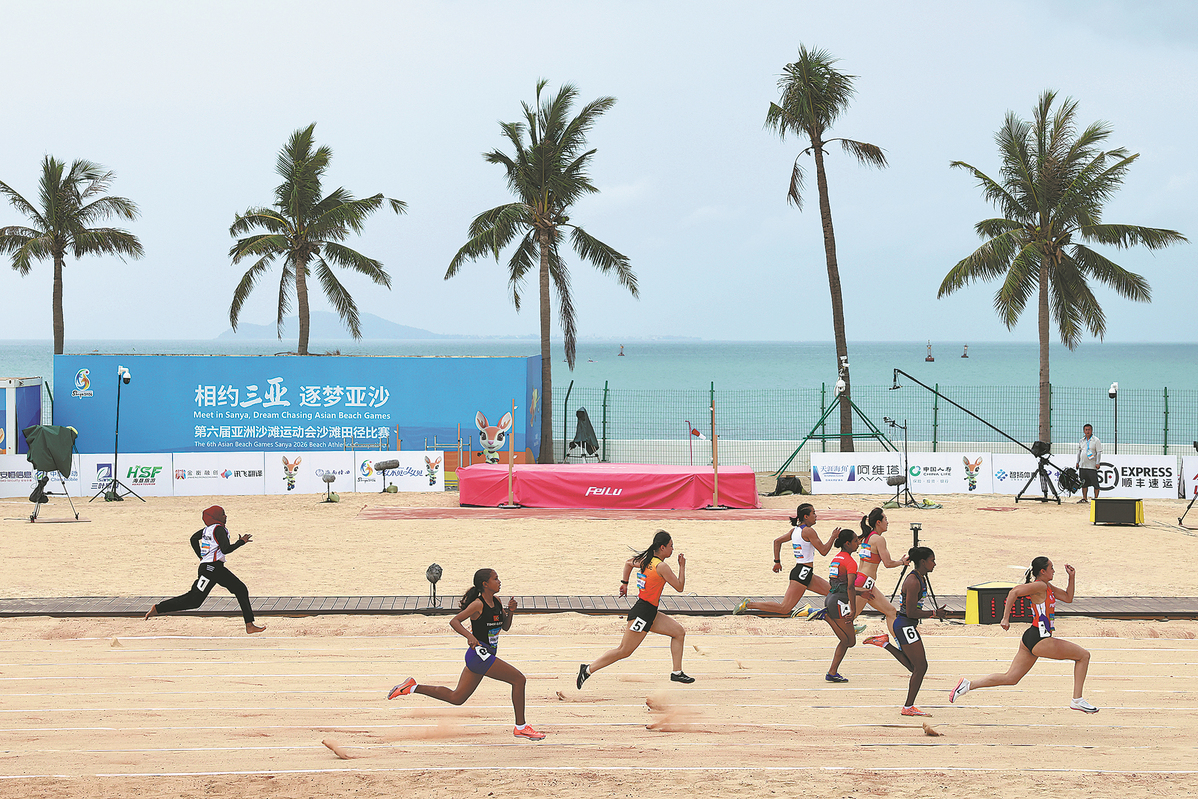
With the bounce and grip no more, and firm tracks swapped for powdery sand, Asia's track and field elites have taken a leap into the unknown in the tropical island province of Hainan at the 6th Asian Beach Games, having their strength and adaptability tested like never before.
Make no mistake: the bustling scenes of jumping, running and throwing on the sandy fields of Sanya's Phoenix Island over the past weekend were by no means part of any folk sports contests, or school sports meet, despite the seemingly casual set-up, chattering crowd and carnival atmosphere at the gathering in the coastal city.
It was athletics at the Asian Beach Games, a track and field meet at the continental level, only being staged in less familiar conditions for most of the elite sprinters and jumpers, who found it challenging, yet fun, to adapt their techniques.
The Games' three-day athletics program included 10 medal events — men's and women's 60-meter sprint, 4x60m relay, long jump, high jump and shot put — with only the throwing discipline held on its regular surface, while the other events took place on dry, sifted sand laid over a firm layer of compacted clay.
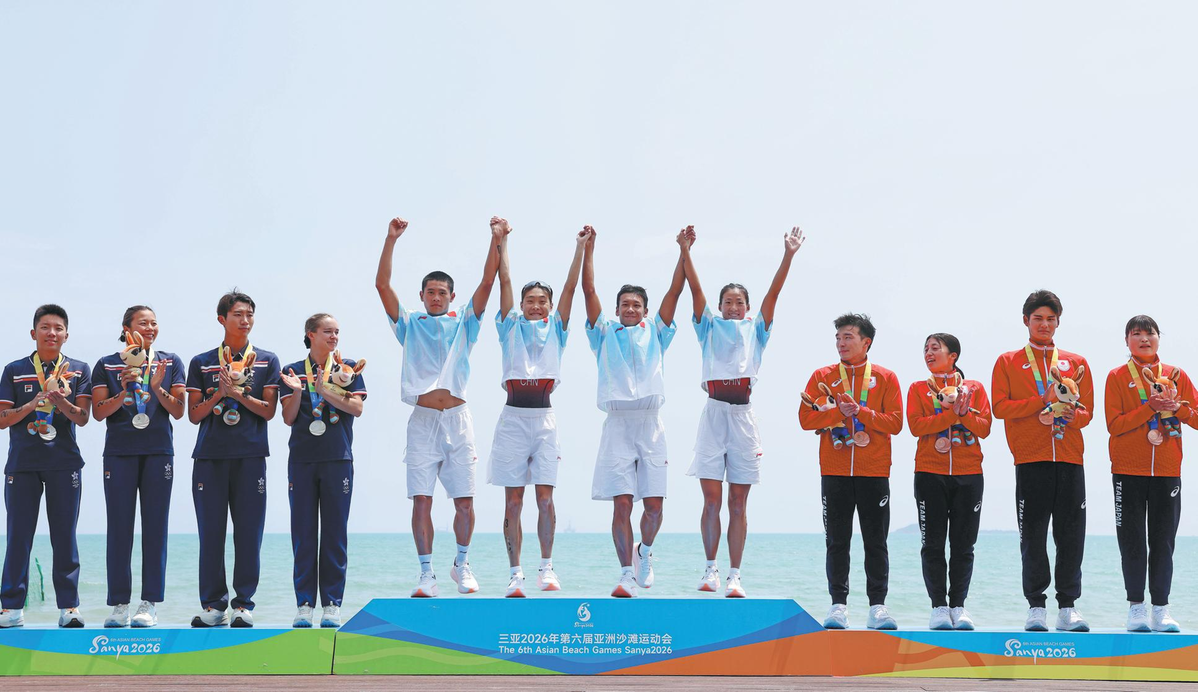
Led by its strong sprinters, Thailand topped the gold-medal rankings with three titles: men's and women's 60m and the women's 4x60m relay, while host China signed off as the overall medal leader with a total of 13, including two golds from the men's relay and women's shot put.
While enjoying the authentic "beach feel" on the golden shore of Sanya, athletes competing on the unique terrain — totally different from the synthetic track used at the last Games in Vietnam in 2016 — had to learn a lesson in adaptability, as they rewrote years of muscle memory to overcome the sand's loose and shifting nature.
"Running on sand feels odd at first, but it's a fresh and fair experience for everyone," men's 60m winner Puripol Boonson of Thailand said of his first beach race after helping his country finish second in the relay final on Sunday.
"It is nothing like track running, and it needs plenty of adjustments," said Boonson, who cracked the 10-second barrier and cemented his status as a world elite by clocking 9.94 at last year's Southeast Asian Games in Bangkok.
"Sand can slow your pace, but it also works your leg muscles differently, demanding more from your strength and balance."
China's men's sprinter Huang Youchao put it into more straightforward words: "Here, the sand eats your strength," he said after his 60m heat last week. "The harder you push, the more you sink."
"On a regular track, I can push off with full force and feel the ground push back," Huang explained."Here, the sand absorbs your force. My time was 0.1 to 0.2 seconds slower than my training results, but after a few practice runs, I made a quick adjustment."
The action was fun to watch, though.
The 60m heats last week even saw some athletes run barefoot, against the majority wearing spikes.
Angam Khaled Shmal Alzabidi of Yemen was the only one in her heat who chose to complete the run in the most "down-to-earth" way.
"It was hard to adjust, even with shoes on. It got slippery during the dash, so I just ran barefoot to feel the sand myself," said the 17-year-old who, despite coming last in her heat, finished in a bright mood.
Jumpers face even more complex challenges, with the run-up areas covered by sand, yet the takeoff zones set up in the regular fashion — a 1.2-meter-wide rigid strip for leaping off in long jump, and a synthetic takeoff mat for stable support in high jump.
From fighting against the sand in the run-up to attempting as normal a takeoff as possible, athletes have had to improvise when taking their leaps of faith.
In men's high jump, China's silver medalist Zhang Hao said that his solution was to run as nimbly and swiftly as an antelope.
"I soon realized after the first few attempts that, competing on sand, the harder you push, the less rebound you get," said Zhang, a bronze medalist at last year's Chinese National Games who set his personal best of 2.24m in March at a domestic meet in Chengdu.
"I didn't adapt well in the beginning. My normal approach requires a fast rhythm, which did not work. So, I switched to a toe-first, forefoot-pushing technique in the run-up, like an antelope.
"I had a miss at 2.05m, because I tried to go back to my old pattern, thinking it would boost my speed, but I failed on the first attempt. On the second try, I switched to my new, sand-friendly approach and succeeded," said Zhang, who eventually settled for runner-up with 2.05m.
The sport's continental governing body said the Sanya meet has provided helpful feedback — both pros and cons — for the unique format to be streamlined for further editions.
"This is a special competition," Dahlan Jumaan Al-Hamad, president of Asian Athletics Association, said in Sanya. "As a member of the Olympic Council of Asia, I am here to study the event itself, and our objective is to move this study forward quickly, with the possibility of adding more events in the future."
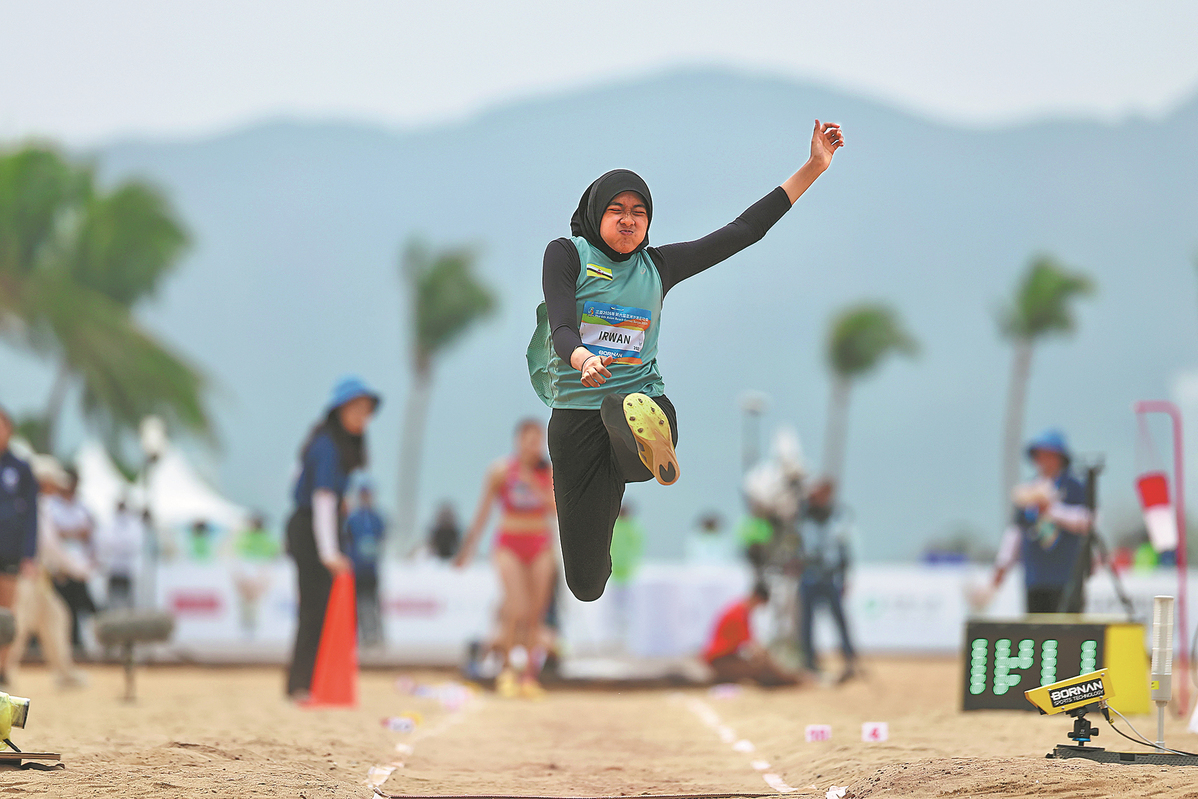
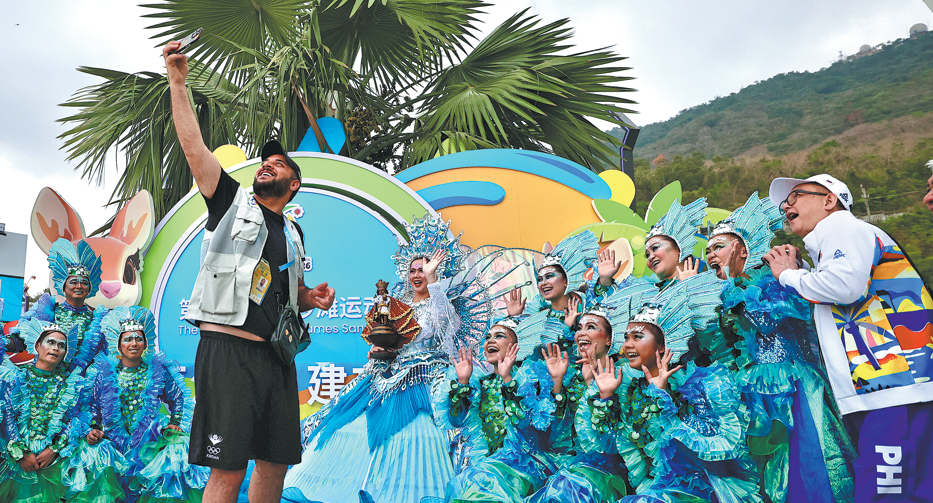
Asia's track and field elites have taken a leap into the unknown in the tropical island province of Hainan at the 6th Asian Beach Games, having their strength and adaptation tested like never before, delivering their best on unfamiliar surfaces. [Photo by Wei Xiaohao/China Daily]
2026-05-28 17:21:33

2026-05-14 17:36:20

2026-05-02 20:29:40
2026-05-02 19:22:30

2026-05-01 15:18:43
2026-05-01 14:16:11

Official Weibo

Official Wechat

Official Tik Tok

Official WeChat Channel Account

Official rednote Account